


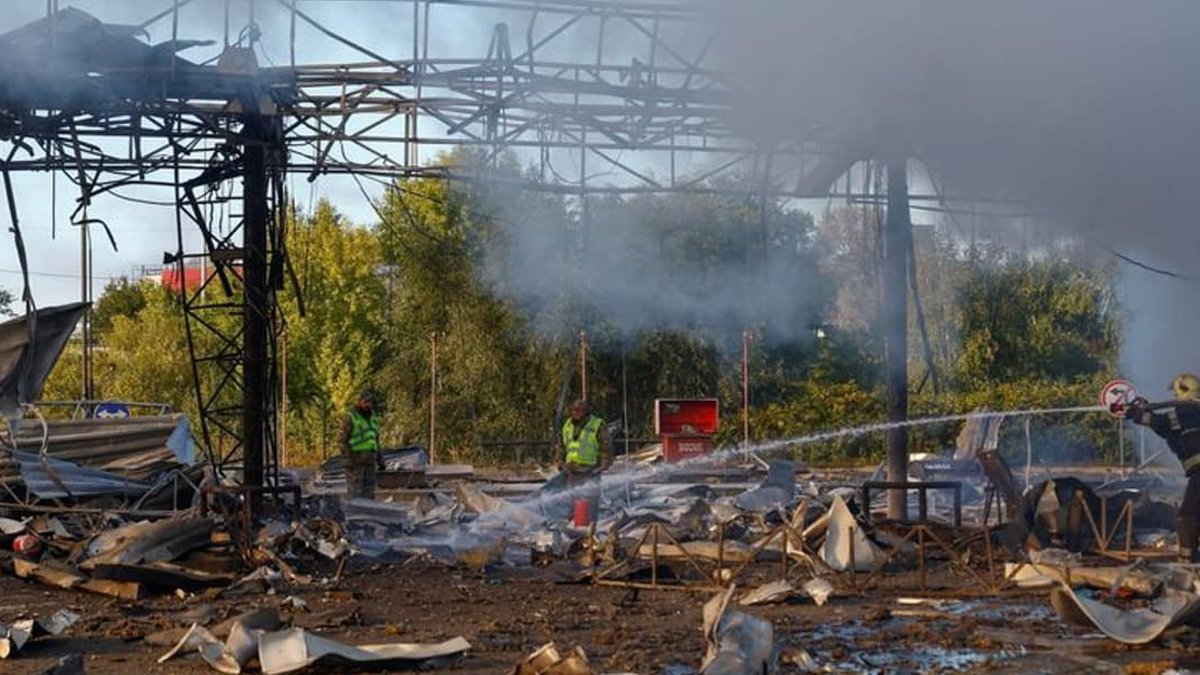
Russia launched a series of drone strikes on Kyiv on Wednesday, targeting critical infrastructure as Ukrainian President Volodymyr Zelenskiy addressed the UN General Assembly. The attacks hit railway facilities, warehouses, and fuel stations, marking one of the most intense strikes since Russia began using faster, high-flying drones that are harder to intercept. These drones, often jet-powered, have become a significant challenge for Ukrainian air defenses due to their speed and altitude, making them difficult to shoot down.
Kyiv Mayor Vitali Klitschko reported two fatalities and 45 injuries, with two people in serious condition. A drone struck a nine-story non-residential building, a business center, and several warehouses. Explosions and smoke were seen across the city center and surrounding areas, with the attack lasting from morning into the evening, causing widespread disruption and fear among residents.
Civilian Infrastructure Under Fire
Zelenskiy stated that Russia deployed numerous jet-powered drones against Kyiv, continuing its strategy of targeting civilian and critical infrastructure. “Russia continues to turn civilian and critical infrastructure into targets: pharmaceutical facilities, gas stations, railways, communications infrastructure, and shopping malls,” he said on X. This pattern of attacks aims to undermine Ukraine’s ability to function normally, affecting everything from healthcare to transportation and daily life.
In eastern Ukraine, on the frontline of the 4-1/2-year-old war, a Russian aerial bomb attack killed five people and injured six in the village of Oleksandrivka, Regional Governor Vadym Filashkin said. Seven people were trapped under rubble, highlighting the devastating impact of these attacks on civilian populations. The village is near Kramatorsk, a key city Russia aims to capture, showing the strategic importance of this region in the ongoing conflict.
Zelenskiy’s UN Address and Calls for Support
At the UN General Assembly, Zelenskiy warned of a harsh winter ahead for Ukraine and urged continued sanctions on Russia. He emphasized the need for a truce on energy attacks before the cold sets in, threatening to make the winter deeply painful for Russia if no agreement is reached. Zelenskiy also stressed the importance of maintaining international pressure on Moscow, including sanctions on Russian oligarchs, to curb Russia’s ability to sustain its military operations.
Zelenskiy discussed a potential bilateral ceasefire on energy targets with U.S. President Joe Biden and requested increased supplies of U.S. Patriot air defense missiles. No agreements were made, and Zelenskiy expressed readiness for “any format” of an energy ceasefire, provided Russia halts its attacks on Ukraine’s infrastructure. This proposal reflects Ukraine’s strategic focus on protecting its energy grid, which is key for surviving the winter and maintaining morale.
Russia’s Stance on Peace Talks
The Kremlin stated that conditions for future peace talks with Ukraine are not yet in place. Following a meeting between Russian Foreign Minister Sergei Lavrov and U.S. Secretary of State Antony Blinken, Russia reaffirmed its commitment to achieving the objectives of its “special military operation.” This stance indicates that Russia remains focused on its military goals and is unwilling to compromise on key issues, complicating efforts to achieve a diplomatic resolution.
The attacks in Kyiv targeted the neighborhood near the main railway station, though the station itself was not damaged. Ukrainian railway operator Ukrzaliznytsia reported damage to other rail infrastructure and one injured worker. Oil company Ukrnafta confirmed that one of its petrol stations in Kyiv was hit, the sixth such attack in recent weeks. These strikes are part of a broader strategy to disrupt Ukraine’s transportation and energy networks, aiming to weaken the country’s ability to resist and function effectively.


