


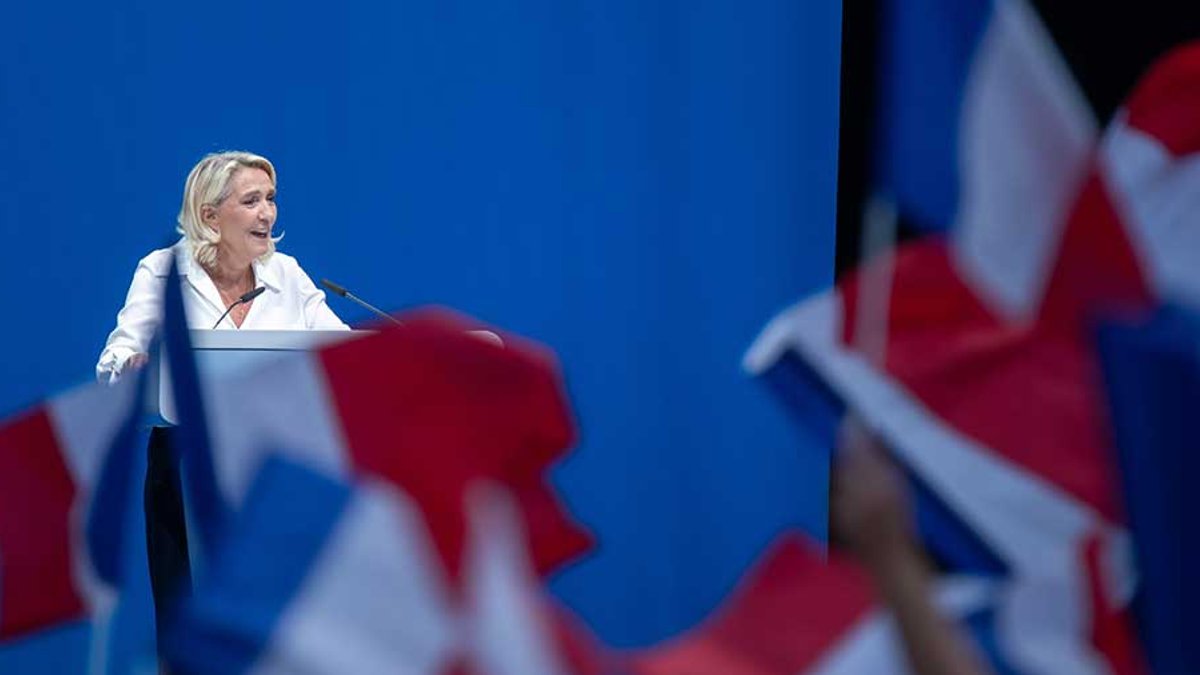
Marine Le Pen’s potential victory in France’s upcoming presidential election is already shaping EU discussions, with the far-right leader’s pledge to challenge European integration casting a shadow over Emmanuel Macron’s final months in office.
Le Pen’s Pre-Election EU Gambit
Le Pen traveled to Brussels on the eve of a major EU summit, addressing the media with plans to cut France’s contribution to the EU budget and reduce financial support for Ukraine. A European diplomat described her strategy as “cunning,” noting that holding a press conference before the meeting allowed her to set the agenda. The National Rally leader also gave an interview to the Financial Times, warning of budget conflicts and difficulties for EU leaders if she wins.
Francesco Nicoli, a politics professor at Italy’s Polytechnic University of Turin, called the discussion “quite scary,” particularly on Ukraine. European officials expressed concern that Le Pen is attempting to influence EU affairs months before the vote, with one senior official admitting they struggle to imagine the bloc under a French far-right government.
Macron’s Final Push in Brussels
As Macron prepares to leave office after two terms, diplomats say he is making the most of his remaining influence. Despite domestic challenges including student protests and debt concerns, the French president maintains a strong position in Brussels. Sebastien Maillard of the Jacques Delors Institute noted that EU leaders are eager to secure Macron’s support before a potential shift in leadership. “There is the will to make the most of the fact he is still there, and to lock in whatever can be before a possible storm,” he said.
Macron’s skills as a negotiator contrast sharply with German Chancellor Friedrich Merz, who trails far behind in influence following Germany’s recent far-right electoral gains. Nicoli observed that Macron excels in foreign and security policy but is weaker on economic issues. The French leader’s decision to avoid taking questions from journalists during the summit may reflect his desire to prevent further overshadowing of his discussions.
Behind Closed Doors in Brussels
The EU budget negotiations, pitting fiscal conservatives like Germany against countries seeking increased spending, present a key test for Macron’s remaining influence. His international reputation, according to Maillard, may help mitigate France‘s domestic difficulties. Macron’s impact on decisions ranging from the European Central Bank leadership to security cooperation highlights his continued relevance in EU affairs.


