


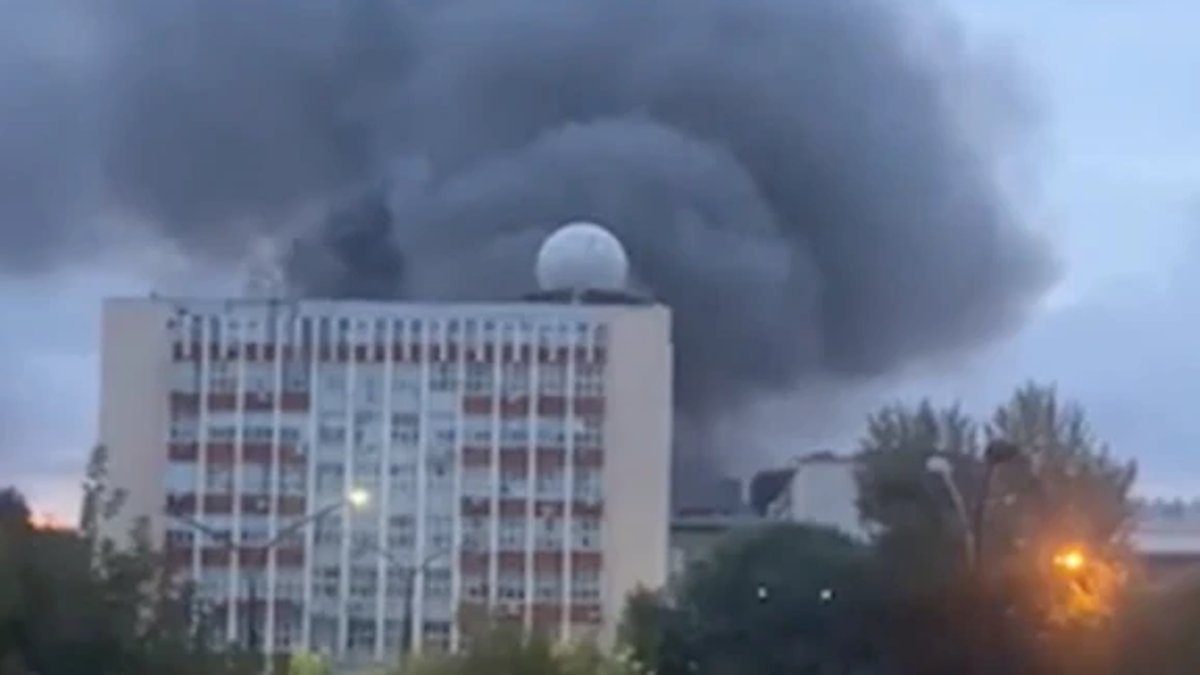
Russia has described the damage from a Ukrainian long‑range missile strike on the TsSKB‑Progress rocket and space center in Samara as “localized,” even as video on Russian Telegram channels showed a large fire still burning at the site.
Official statements versus on‑the‑ground reports
Mayor Ivan Noskov said the industrial infrastructure in Samara suffered only “local damage.” Regional Governor Vyacheslav Fedorishchev added that an industrial enterprise had been hit and that emergency crews were on the scene, but he did not name the specific facility. State broadcaster RT echoed the governor’s brief, noting that details on casualties and damage were being verified.
Meanwhile, Russian military‑focused Telegram channel Svodki opolcheniya Novorossii reported that a fire continued at the TsSKB‑Progress complex after a Flamingo cruise‑missile strike, claiming the missile struck the main workshop. Another channel, Vot Tak, said the blaze was at an industrial site that includes the rocket‑and‑space center and the nearby Aviakor aircraft plant, confirming that authorities had acknowledged industrial damage without specifying the target.
The contrast between the official “localized” description and the vivid images of a burning complex matters because a strike on a major production building could disrupt manufacturing, assembly or specialized equipment, potentially affecting Russia’s launch‑vehicle output.
Related: Namecheap outage disrupts websites DNS and email
Why the Samara facility matters
TsSKB‑Progress is a central producer of the Soyuz‑2 family of launch vehicles, which place government, scientific and military payloads into orbit. The center also supports Russia’s effort to build a sovereign satellite communications network, the Rassvet low‑Earth‑orbit constellation launched in March 2026. Disrupting rocket production could slow the expansion of that network, which Moscow touts as an alternative to commercial services like Starlink.
There is no public evidence that the strike has permanently disabled the Rassvet program, but the potential impact on the pace of satellite deployment is clear. Damage to the main workshop could delay assembly of Soyuz‑2 rockets, which in turn would affect launch schedules for both civilian and defense missions.
Assessing the true extent of the damage will require satellite imagery and on‑site inspections. Until then, the situation remains uncertain.
The strike comes amid a broader Ukrainian campaign that has increasingly targeted Russia’s energy infrastructure, amplifying existing fuel shortages.
Related: Top RIA databases for asset managers unveiled
Beyond fuel, attacks have also affected electricity and logistics. In the Rostov region, a Ukrainian drone damaged power lines on Aug. 15, leaving roughly 1,000 residents in seven villages without electricity. Similar strikes have disrupted oil terminals, pipelines and transport routes, forcing authorities to prioritize fuel for public transport, utilities and emergency services.
These cascading effects illustrate how interconnected Russia’s energy system is; a single refinery outage can ripple through railways, pipelines and storage facilities, magnifying the overall impact.
From a practical standpoint, the Samara strike shows that Ukraine can strike high‑value, strategically important targets far from the front lines. If the damage to the rocket center proves extensive, it could add pressure to an already strained system that is trying to repair refineries, maintain fuel supplies and continue satellite deployment under sustained attack.
Broader implications for Russia’s industrial resilience
Russia’s official response often confirms attacks while downplaying specifics, emphasizing intercepted weapons instead. On Aug. 15, the Defense Ministry claimed its forces had intercepted or destroyed 598 Ukrainian drones across more than 20 regions, while regional officials acknowledged damage to industrial sites and power infrastructure.
Related: Water Depot Helps Businesses Market Through Bottles
Such statements are difficult to verify independently, but the physical evidence—fires, power outages, refinery shutdowns and fuel restrictions—provides a clearer picture of the real impact.
In the middle of this crisis, ordinary citizens in affected regions may find themselves waiting longer at fuel pumps and coping with intermittent electricity. Their daily routines are disrupted, and the uncertainty about when critical facilities like the rocket center will return to full operation adds a layer of anxiety that statistics alone cannot capture.
While Russia possesses considerable industrial depth and has repeatedly demonstrated an ability to rebuild damaged facilities, the cumulative effect of repeated strikes may test the limits of that resilience. The Samara attack adds a new dimension to that challenge, targeting a component of the space program that is essential for both civilian and military objectives.
For now, Russian authorities continue to stress the number of intercepted missiles, but the underlying vulnerability of key industrial and energy assets remains evident.


