


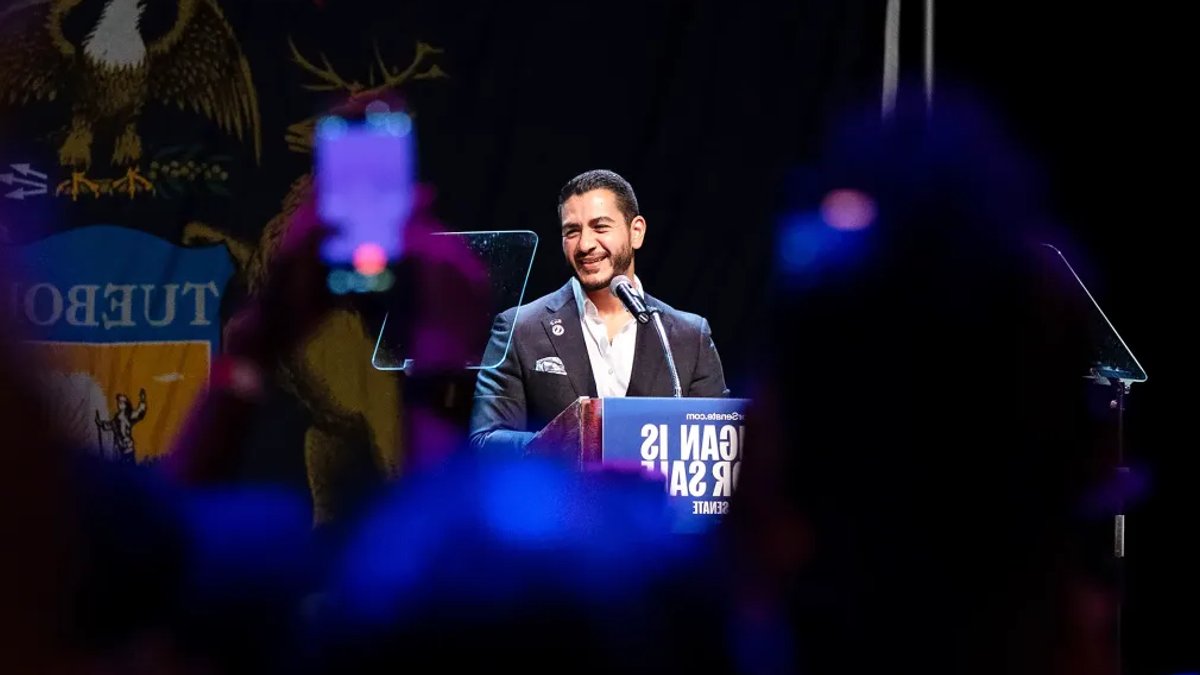
Abdul El-Sayed has won Michigan’s Democratic Senate primary, defeating U.S. Rep. Haley Stevens in a race that drew national attention as a test of the party’s ideological split. The victory gives him the nomination for November’s general election, where he will face Republican Mike Rogers for the seat being vacated by Sen. Gary Peters.
Progressive vs. establishment in a battleground state
The primary served as a proxy fight between the Democratic Party’s progressive and moderate factions. El-Sayed, a former Detroit health director and epidemiologist, campaigned as a grassroots candidate opposed to corporate influence. Stevens, supported by Gov. Gretchen Whitmer and other party leaders, presented herself as the more electable choice in a competitive race.
Outside spending flooded the contest, reflecting its high stakes. Michigan has remained a key battleground state, with close presidential and statewide contests in recent election cycles. Both parties now see the state as essential to controlling the Senate in 2026.
El-Sayed emphasized progressive priorities, including canceling medical debt and expanding healthcare access. His public health background, which included a program to remove lead from schools and provide free glasses to children, became central to his appeal.
A narrow win with national ripple effects
The outcome was tight, showing a deeply divided Democratic electorate. El-Sayed’s success marks a rare progressive win in a major primary, though some doubt whether his platform can attract swing voters in November. Rogers, a former congressman, enters the general election as the GOP nominee, with both campaigns expected to draw heavy national funding.
The primary result demonstrates that grassroots energy can still overcome better-funded opponents in Democratic politics. The general election will determine whether that energy can broaden its appeal or if Michigan voters prefer a more centrist option.
Related: Fauci investigations and hearings timeline: 2020–2026
Stevens’ defeat leaves the Democratic establishment without its preferred candidate in a key race. Some party strategists worry that El-Sayed’s progressive positions could push away suburban voters who shifted toward Democrats in recent elections. Others believe his experience as a physician and public health leader may resonate in a state still dealing with the pandemic’s effects.
The general election will also reflect Michigan’s changing political environment. Once a dependably blue state, it has become a microcosm of national partisan shifts, with rural areas moving right and urban centers growing more liberal. El-Sayed’s coalition—built on young voters, progressives, and communities of color—mirrors the Democratic Party’s future, but its statewide viability remains uncertain.
Rogers has tried to paint El-Sayed as out of touch with Michigan values, citing his past criticism of Israel and support for policies like Medicare for All. The Republican has also labeled him a “career politician,” despite his limited time in government. This line of attack may gain traction in a state frustrated with partisan gridlock.
The race is now clear. El-Sayed will spend the coming months making his case to voters, while Rogers works to solidify his base. What began as a low-key primary has become a defining contest for both parties and a measure of American politics’ direction.
Home warranty providers for high-end appliances have seen increased demand as Michigan residents invest in long-term protection for household systems.


