


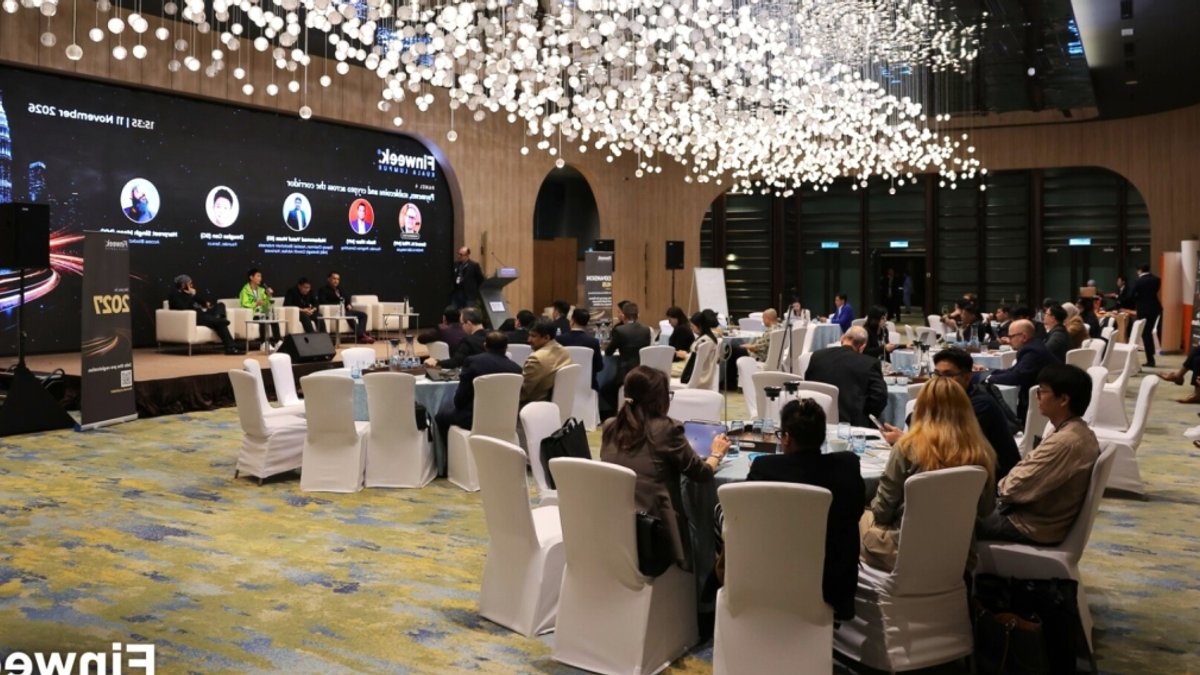
Eighteen fintech associations from 12 countries in Europe and ASEAN gathered in Kuala Lumpur on 11 November 2026 to sign a Founding Memorandum establishing the EU–ASEAN Investment Gateway. The agreement, formalized during Finweek Kuala Lumpur 2026, replaces individual country negotiations with a unified framework to facilitate cross-market entry. The event, themed Sovereign Gateway for Capital, attracted over 150 attendees, including regulators, diplomats, and industry leaders.
The European Digital Finance Association’s endorsement signaled strong official support for this collaborative approach. Davy Čajko, CEO of Finweek and president of Slovakia’s FINAS, described the initiative as digital diplomacy in practice. “Who has time today to negotiate for a year with twelve countries, one by one?” he stated. “That is why our associations signed one shared text.” Čajko framed the memorandum as more than a legal document—it serves as a door for joint projects, companies, and capital.
Current investment disparities show the urgency of this partnership. Farah Jaafar, Global Advisor at Straits Investment Bank, noted that Europe has ground to make up in ASEAN. Only about 16 per cent of investment in ASEAN comes from within the region, compared with 60 per cent in Europe. Jaafar said the EU as a group still has a lot to do to compete with other investors in ASEAN. Meanwhile, ASEAN’s digital economy is projected to reach $2 trillion by 2030 under its Digital Economy Framework Agreement, increasing pressure to align regulations before business expansion accelerates.
Digital sovereignty demands cross-border trust
Building trust is essential. Keynote speaker YBhg. Dato’ Ts. Dr. Haji Amirudin Abdul Wahab, a cybersecurity advisor to Malaysia’s Crown Prince, defined digital sovereignty as a capability, not isolation. The challenge lies in cross-border recognition—tokenized sukuk regulated in one ASEAN country are not yet valid in others. Sam Majid, former CEO of Malaysia’s National AI Office, cautioned that all fast cars have big brakes, meaning rapid growth requires infrastructure to prevent operational friction.
Regulatory clarity is a critical advantage. Europe’s MiCA framework provides a single license with EU-wide passporting, offering ASEAN firms a straightforward entry point. Martin Peter, director of Slovakia’s Ministry of Finance, highlighted this as a key benefit. “With MiCA, Europe moved from fragmented national rules to one framework with a single licence and EU-wide passporting. Together with the DLT Pilot Regime, now under review to help tokenised markets scale, this gives ASEAN innovators a clear entry point into Europe – and European firms experience they can share across the corridor,” he said.
A panel of association leaders, moderated by Cristina Amor Maclang of the International Digital Economies Association, outlined four priorities for foreign companies entering ASEAN markets: credible local partnerships, regulatory clarity, investor access, and a smooth operational setup. Alessandra Guion, chair of the EDFA, emphasized treating ASEAN as a strategic partner rather than just a market, stressing the importance of shared intelligence and coordinated timelines.
Payments and stablecoins face critical hurdles
Payments infrastructure remains a bottleneck. Harpreet Singh Maan, president of Malaysia’s ACCESS Blockchain Association, noted that cross-border transactions still rely on correspondent banks, foreign exchange delays, and repeated compliance checks, none of which ensure instant settlement. While Malaysia has advanced with tokenized sukuk and deposits, cross-border recognition lags. For 2027, Maan proposed three immediate priorities: defining oversight for stablecoins moving between regions, ensuring regulators can independently verify reserves, and eliminating pre-funding requirements.
Douglas Gan, founder of Singapore’s Sera.cx, observed that businesses already use stablecoins for cross-border settlements but face USD intermediation challenges. “As more countries get their own local-currency stablecoins, the question is how they convert into one another without everything passing through the US dollar first,” he said.
Diplomatic backing strengthens the initiative. Ambassadors from Hungary, Slovakia, Indonesia, Ukraine, and the Czech Republic endorsed the Gateway, positioning it as a tool to diversify bilateral relations. Ukraine’s ambassador highlighted his country’s fintech resilience during war, arguing that cross-border payments must function even in a crisis. The Czech Republic’s fintech association signed the memorandum and participated alongside local firms.
The summit’s practical focus continued on 12 November with Landing Day in Kuala Lumpur’s TRX financial district. A delegation of 39 participants toured business-setup services, a 5G smart-city showcase, and blockchain hubs, translating discussions into actionable steps for market entry.
Gateway expands with sandboxes and research
The Gateway’s working agenda now includes cross-border asset recognition, regulatory sandboxes, technology adaptation, and cost reductions for smaller firms. Finweek will return in 2027 to mark 50 years of EU–ASEAN dialogue, introducing an Expansion Hub, a platform to streamline first-contact challenges, and the Malaysia Fintech Radar, a joint research project with Malaysian and Slovak universities.
The ASEAN–EU Fintech Leaders Council will meet annually at Finweek, with each signatory association holding a permanent seat. This body will oversee implementation, ensuring alignment between the two regions’ regulatory and business priorities. The council’s first task is defining a cross-border asset recognition framework for tokenized securities, including sukuk and digital bonds, to address the current lack of mutual validation across ASEAN markets. Regulators from both regions will collaborate on a pilot program, with Malaysia’s CyberSecurity Malaysia and Slovakia’s Financial Market Authority leading the technical review.
To reduce barriers for smaller firms, the Gateway will introduce cross-border regulatory sandboxes operating under unified rules. The Expansion Hub, launching in early 2027, will connect European and ASEAN companies with local partners, legal firms, payment processors, and compliance specialists, to streamline market entry. Kati Ferry, CEO of EUROCHAM Malaysia, emphasized that the Hub’s value lies in pre-negotiated agreements between service providers, potentially cutting initial contact time and cost.


