


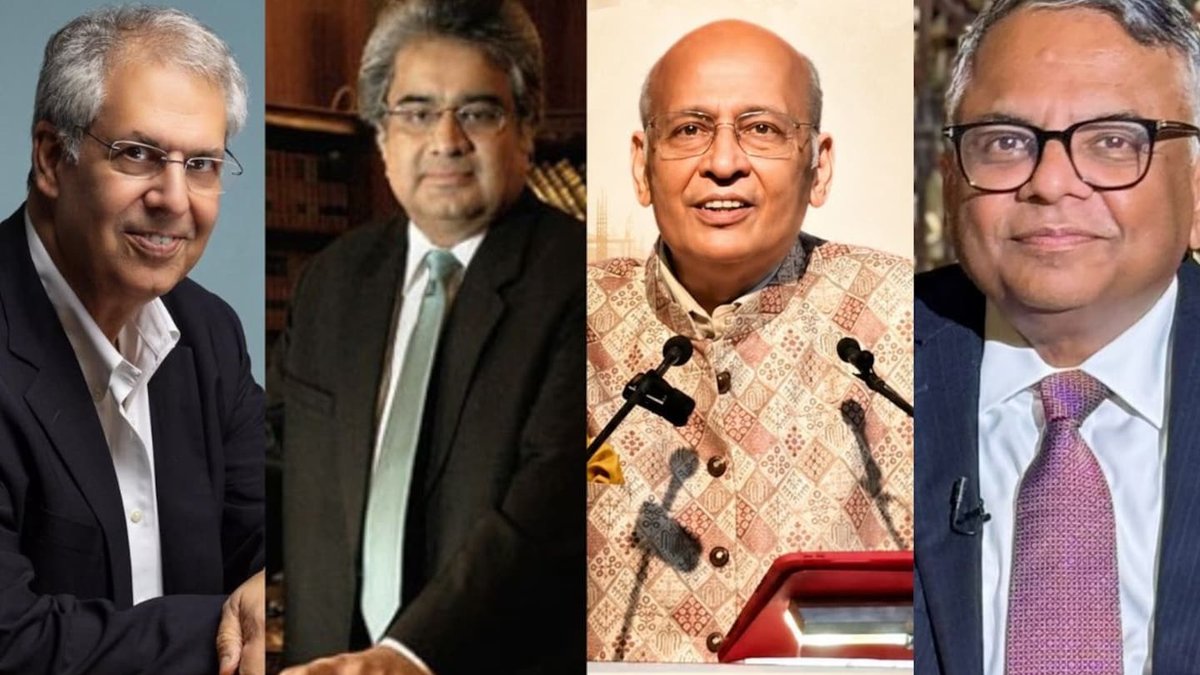
The Tata Sons boardroom battle has taken a public turn, with top legal experts Abhishek Manu Singhvi and Harish Salve offering contrasting perspectives on Chairman N Chandrasekaran’s reappointment and the company’s proposed listing. Singhvi emphasized the sovereign voting rights of Tata Trusts, which owns 66% of Tata Sons, while Salve argued that the leadership clash is distracting from the primary regulatory mandate to take the company public.
Singhvi stated that the dispute is fundamentally about the Tata Trusts’ majority ownership of Tata Sons, rather than individual shareholders or executives. He said, “What has happened is that you cannot have a runaway board which decides things with the active disagreement of 66% shareholders. It is a major principal issue of shareholder-owner privacy.”
Board Powers and Shareholder Rights
Singhvi defended the Trusts’ demand for continued representation on the Tata Sons board, saying they are seeking only a minimum of one-third representation while allowing the remaining two-thirds to comprise non-Tata nominees. He noted that the arrangement requires the concurrence of the relevant Trust nominees for certain board decisions and that the absence of the required affirmative vote effectively operates as a veto.
Salve, on the other hand, argued that the focus on whether the board could act against shareholder wishes is distracting from the issue raised by the Tata Trusts. He said the Trusts’ concerns center on the Tata Sons listing and their disagreement with Tata Sons Director and Sir Dorabji Tata Trust Vice Chairman Venu Srinivasan’s position on it.
Read Also: U.S. Gains Permanent Security Control Over Greenland
Singhvi cited a Supreme Court observation on corporate majority, saying, “Right or wrong, corporate majority has to prevail. The definition of corporate majority is he who owns the shares.” Salve, meanwhile, argued that the RBI’s classification of Tata Sons as an upper-layer NBFC was driven by concerns over direct and indirect access to public funds, including through companies within the Tata Group.
Tata Sons Listing and Regulatory Oversight
Salve said the RBI had initially taken a different approach to holding companies with access to public funds but subsequently reconsidered its position. He cited Tata Steel’s roughly 4% stake in Tata Sons, which he valued at around Rs 40,000 crore, as an example of the economic implications of Tata Sons’ structure. A listing, he said, could allow Tata Steel to monetize its holding and deleverage, while continuing to hold the stake would leave it reliant on dividends from Tata Sons to service its debt.
Singhvi, however, said the listing issue should not be conflated with Chandrasekaran’s reappointment. He noted that Tata Sons had applied for deregistration more than two years ago and that the application had only recently been rejected by the RBI. Singhvi stated that the regulatory action could potentially be challenged through a writ petition, and that the dispute could ultimately move into the courts.
The Tata Group’s structure is deliberately designed around the Tata Trusts’ philanthropic role, with Singhvi emphasizing that the Trusts’ ownership of Tata Sons is intended to support charitable work. He said, “The important point in this architecture is that in anything and everything that goes out of Tata Sons, it must go to a charitable philanthropic trust, unlike a normal shareholder.” The outcome of the legal battle will have significant implications for the future of the Tata Group and its philanthropic endeavors, with the Reserve Bank of India playing a significant role in shaping the company’s regulatory framework.
Read Also: McDonalds to Revamp Value Strategy to Revive US Sales
Salve emphasized the significance of the RBI’s regulatory oversight, stating that the threshold for an upper-layer NBFC is high and questioning whether it is unreasonable for a company of Tata Sons’ size to be subject to enhanced regulatory standards. He questioned whether it is unreasonable for a company of Tata Sons’ size to be subject to such standards, given its potential impact on the economy.
Singhvi reiterated that the Tata Group’s structure is designed to support charitable work, with the Tata Trusts’ ownership of Tata Sons intended to fund philanthropic endeavors.
Regulatory Framework and Corporate Governance
Singhvi stated that the regulatory action could potentially be challenged through a writ petition, which could lead to a lengthy legal battle. Salve, on the other hand, argued that the RBI’s oversight is necessary to ensure that companies like Tata Sons operate with transparency and accountability.


