


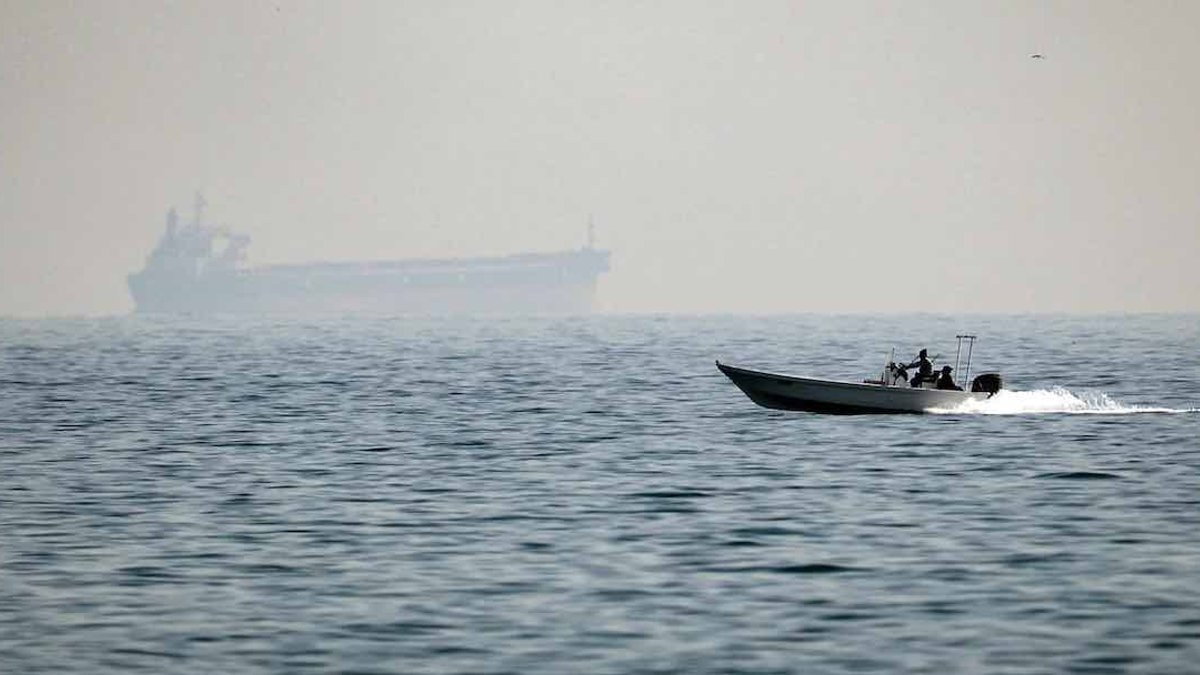
Oil prices today remain above $80 a barrel, as a deal between Iran and Oman to establish shipping lanes through the Strait of Hormuz has failed to reopen the waterway. The agreement, which is in its final stages, would not by itself restore normal tanker traffic, according to Iranian officials, who have tied a broader reopening to US actions, including sanctions relief and other concessions.
Strait of Hormuz Traffic and Oil Prices
The Strait of Hormuz is one of the world’s most important energy chokepoints, connecting the Persian Gulf with the Gulf of Oman and Arabian Sea. Oil flows through Hormuz averaged 20.4 million barrels a day in the first quarter of 2025, but had fallen to 14.6 million barrels a day by the first quarter of 2026, amid the conflict.
The reduction in oil flows has resulted in a market that reacts not only to physical supply but to expectations about how quickly shipping can return. When investors believe an agreement will restore traffic, oil futures fall, as traders anticipate additional crude reaching the global market.
On August 4, Brent and US crude fell sharply as traders increased expectations of a deal, but by August 7, Brent had recovered to $83.55 as uncertainty over the proposed reopening arrangement returned. Brent crude and US West Texas Intermediate prices remain volatile, influenced by the ongoing negotiations and uncertainty surrounding the Strait of Hormuz.
Related: FDA Approves New Melanoma Treatment
Impact on Gas Prices and the US Economy
The impact of the conflict is already visible at US gas stations, with the national average for regular gasoline at $4.098 a gallon, compared to $3.14 a year earlier.
The inflation risk is now more important than the headline oil price, as a prolonged increase in fuel, transportation, and industrial input costs can be difficult for businesses and consumers to absorb.
Trump’s Influence on Oil Markets
On August 1, Trump said the US would hold off on another attack on Iran, while efforts continued toward a deal, and oil subsequently fell sharply as investors interpreted the development as reducing the probability of further escalation.
A disruption in the Persian Gulf can raise American fuel costs, even if US production remains strong, affecting households and companies with high fuel consumption.
Related: Opay challenges Nigerian banks with higher interest rates
A durable reopening of the Strait of Hormuz would remove a substantial geopolitical risk premium from crude prices, allowing more oil and petroleum products to move through the normal shipping system.
As the situation remains uncertain, oil prices will continue to be volatile, influenced by the ongoing negotiations and developments in the region. The US economy will be closely watching the situation, as the impact of the conflict on energy prices and inflation continues to unfold.
For now, the focus is on the proposed arrangement between Iran and Oman, and whether it can eventually restore normal tanker traffic through the Strait of Hormuz. The outcome of these negotiations will have significant implications for the global energy market and the US economy.


