

“`html
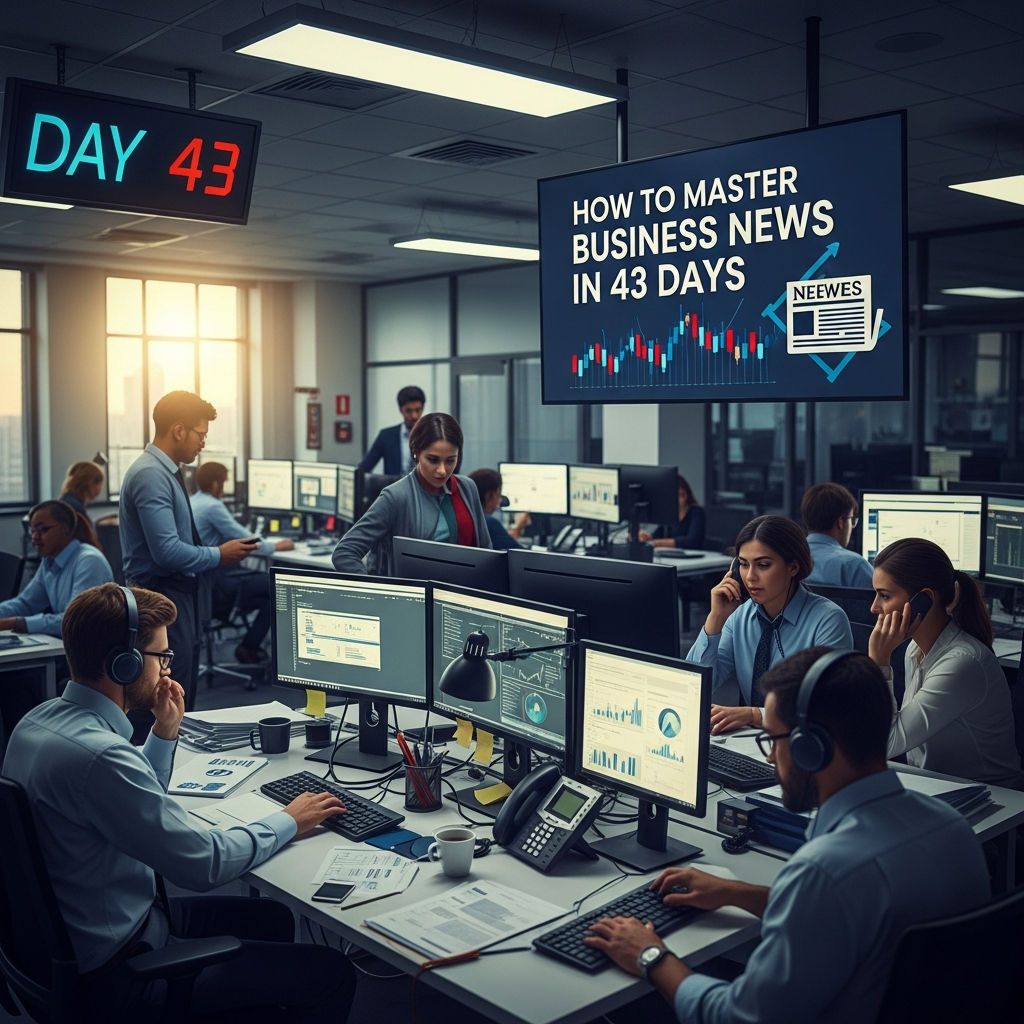
The Ultimate Guide: How to Master Business News in 43 Days
In today’s fast-paced global economy, information is the most valuable currency. Whether you are an aspiring entrepreneur, a seasoned investor, or a professional looking to climb the corporate ladder, understanding business news is no longer optional—it is a necessity. However, the sheer volume of data, jargon, and conflicting opinions can be overwhelming.
Most people give up because they try to learn everything at once. The secret to mastery isn’t intensity; it’s consistency and structure. By following this curated 43-day roadmap, you will transform from a casual observer into a savvy analyst capable of connecting the dots between global events and market movements.
Why 43 Days? The Science of Habit and Comprehension
It takes roughly 21 days to form a habit and another 20 or so to solidify that habit into a lifestyle. By day 43, you aren’t just reading the news; you are interpreting it. This timeline allows your brain to move from “translating jargon” to “strategic thinking.”
Phase 1: The Foundation (Days 1–10)
The first ten days are about immersion. You need to clear the noise and focus on the primary sources that move the needle in the financial world.
- Days 1-3: Curate Your Feed. Stop relying on social media algorithms. Subscribe to reputable newsletters like The Wall Street Journal, Financial Times, or Bloomberg’s Daybreak. Clean out your “junk” news to make room for quality.
- Days 4-7: Learn the Vocabulary. You cannot play the game if you don’t know the language. Dedicate an hour a day to looking up terms like “Basis Points,” “Quantitative Easing,” “P/E Ratio,” and “EBITDA.” Use resources like Investopedia to bridge the gap.
- Days 8-10: Identify the Key Players. Learn who the major “market movers” are. This includes central banks (The Fed, ECB), regulatory bodies (SEC), and the world’s largest asset managers like BlackRock and Vanguard.
Phase 2: Understanding the Macro Landscape (Days 11–20)
Once you understand the words, you need to understand the big picture. Macroeconomics is the “weather” in which all businesses operate.
Connecting Global Events to Local Markets
During this phase, stop looking at individual stocks and start looking at the “Why” behind market trends. If the Federal Reserve raises interest rates, why does the tech sector often take a hit? If oil prices spike, how does that impact consumer spending?
- Monitor Interest Rates: Understand how the cost of borrowing affects business expansion and consumer mortgages.
- Geopolitical Awareness: Observe how a trade dispute in Asia or a conflict in Europe ripples through supply chains and commodity prices.
- The Jobs Report: Learn to read the monthly Non-Farm Payrolls (NFP) report. It is one of the single most influential data points for the US economy.
Phase 3: Sector Deep-Dives and Micro Analysis (Days 21–30)
Now that you see the forest, it’s time to look at the trees. Businesses operate within specific sectors (Tech, Healthcare, Energy, etc.), and each has its own set of rules.
- Pick One Sector per Day: Spend Day 21 on Big Tech, Day 22 on Retail, Day 23 on Renewable Energy. Learn what drives growth in each specific field.
- The Art of the Earnings Call: This is where the real “meat” of business news lives. Pick a company you admire and listen to their most recent quarterly earnings call. Don’t just read the summary; listen to the CEO’s tone and the analysts’ questions.
- Analyze Consumer Behavior: Business news isn’t just about balance sheets; it’s about psychology. Observe how shifts in remote work or AI adoption are changing the revenue models of legacy companies.
Phase 4: Critical Thinking and Bias Detection (Days 31–37)
Not all business news is created equal. Every publication has a lens, and every analyst has an incentive. To master the news, you must become a skeptic.
How to Filter the “Noise”
By day 31, you should be able to distinguish between “News” and “Noise.” News is a change in fundamentals; noise is a temporary fluctuation based on fear or hype.
- Identify Bias: Compare how two different outlets cover the same story. One might focus on the social impact, while the other focuses on the shareholder return. Mastery comes from seeing both sides.
- Question the “Experts”: When a talking head predicts a market crash, look at their track record. Are they selling a newsletter? Are they shorting a stock? Understanding incentives is key to clarity.
Phase 5: Synthesis and Application (Days 38–43)
In the final week, you move from consuming information to generating insights. This is the hallmark of a business news master.
- Day 38-40: The Prediction Exercise. Based on everything you’ve read this month, write down three predictions for the upcoming quarter. They don’t have to be about stock prices; they could be about M&A (Mergers and Acquisitions) activity or a change in consumer trends.
- Day 41-42: Join the Conversation. Engage in professional forums like LinkedIn or specialized subreddits. Sharing your perspective forces you to defend your logic and refine your understanding.
- Day 43: Establish Your Daily Routine. Create a sustainable 30-minute morning “Intelligence Brief” for yourself. This ensures that the progress you’ve made in 43 days lasts a lifetime.
The Tools of the Trade: Essential Resources
To maintain your mastery, you need the right toolbox. Here are the non-negotiables for anyone serious about business intelligence:
- Financial Terminals/Apps: While a Bloomberg Terminal costs $24k a year, apps like Yahoo Finance, CNBC, and Koyfin offer incredible free data.
- Podcasts for the Commute: The Daily Check-Up by WSJ or The Indicator by Planet Money provide deep context in short bursts.
- Economic Calendars: Use sites like Investing.com to track when the next CPI (Inflation) report or Fed meeting is scheduled. Never be caught off guard by a major announcement.
Conclusion: Mastery is a Journey, Not a Destination
Mastering business news in 43 days isn’t about memorizing every ticker symbol on the NYSE. It’s about building a mental framework that allows you to process complex information and turn it into actionable knowledge. The world of business is a giant, interconnected story. By following this roadmap, you have learned how to read the chapters as they happen—and perhaps even predict the ending.
As you move past Day 43, remember that the most successful people in the world—from Warren Buffett to Elon Musk—are voracious consumers of information. They don’t just “check” the news; they study it. Stay curious, stay skeptical, and keep reading.
“`